
AirPhysio Review: A Deep, No‑Nonsense Look at the AirPhysio Breathing Device That’s Getting People Talking
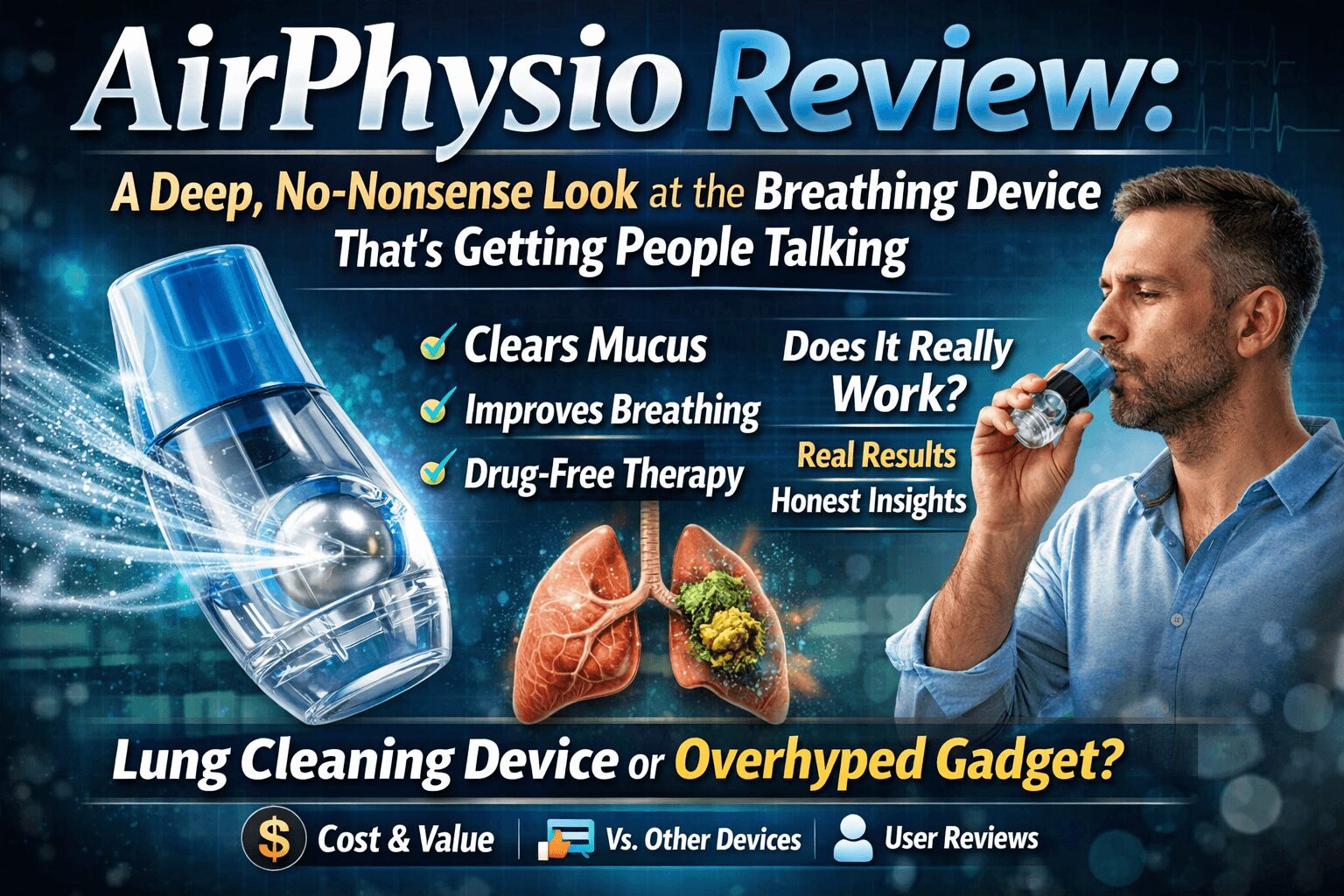
AirPhysio. Say it once, you hear it everywhere. Say it twice, and suddenly you’re wondering if this AirPhysio device is actually the real deal or just another shiny wellness gadget riding the viral wave. I’ve been there. You probably are right now. And that’s exactly why this long‑form, brutally honest review exists.
Within the first few minutes, let’s make something clear: AirPhysio isn’t magic, it isn’t medication, and it doesn’t promise miracles. What it does offer—when used correctly—is a structured, drug‑free way to support breathing, airway clearance, and lung conditioning at home. That’s not hype. That’s physiology.
This article dives deep into how the AirPhysio breathing device works, who it’s for, how it compares to other options, and whether the price makes sense. We’ll talk numbers, mechanisms, real‑world usage, and yes—AirPhysio reviews, including what people love and what they don’t.
What Is AirPhysio, Exactly?
At its core, AirPhysio is a handheld breathing resistance device designed around a principle called positive expiratory pressure (PEP). That’s not marketing jargon—it’s a clinically recognized concept used for decades in respiratory physiotherapy.
When you exhale through the AirPhysio lung device, a stainless‑steel ball inside the chamber creates resistance. That resistance does three things at once:
- It increases airway resistance, helping keep airways open longer during exhalation.
- It creates gentle vibrations that can help loosen mucus in the lungs.
- It engages respiratory muscles, especially those involved in diaphragm breathing.
No batteries. No electricity. No medication. Just airflow, physics, and repetition.
This is why you’ll often see AirPhysio described as a natural lung cleansing device or a drug free breathing device. Not because it “detoxes” anything mystical—but because it works with how lungs already function.
How AirPhysio Works (Without the Marketing Fluff)
Let’s talk mechanics, because AirPhysio how it works is one of the most searched phrases for a reason.
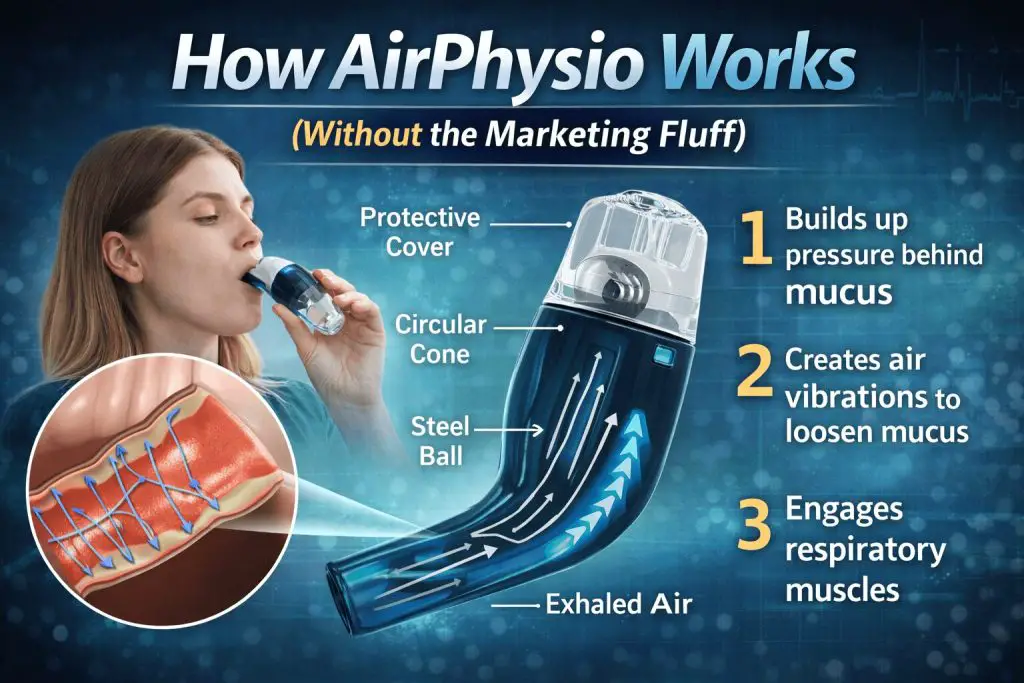
When you breathe out against resistance, pressure builds up behind mucus trapped in smaller airways. That pressure helps move mucus upward, where it can be coughed out or swallowed. This process supports airway clearance—a big deal for anyone dealing with congestion, chronic cough, or breathing issues after flu or COVID.
According to respiratory therapy literature, PEP‑based techniques can improve mucus clearance efficiency by 20–40% compared to passive breathing alone when practiced consistently. That’s not nothing.
And here’s the kicker: because you’re actively exhaling, oxygen flow during the next inhale often improves. More air in, more air out. Rinse and repeat.
Why So Many People Are Looking for a Lung Cleaning Device
Globally, over 260 million people live with chronic respiratory conditions. In the U.S. alone, nearly 1 in 5 adults report some form of breathing difficulty each year. Add post‑viral coughs, pollution, smoking history, and aging lungs into the mix, and suddenly devices like this don’t seem niche—they seem inevitable.
People aren’t just Googling “AirPhysio.” They’re searching for:
- best device to clear mucus from lungs
- how to clear mucus from lungs naturally
- breathing device without medication
- breathing problems solution
That context matters. AirPhysio isn’t trending in a vacuum. It’s riding a very real demand curve.
Who AirPhysio Is For (And Who Should Skip It)
Let’s be real. No device fits everyone.
AirPhysio May Help If You:
- Experience chest congestion relief issues
- Deal with mucus buildup or chronic cough
- Want a home airway clearance solution
- Prefer a natural alternative to inhalers for daily support
- Are working on lung capacity improvement through exercises
Many users searching for breathing exercises for COPD, bronchitis mucus relief, or a lung rehabilitation device land on AirPhysio because it doesn’t require prescriptions or clinic visits.
You Might Want to Avoid It If You:
- Expect instant results after one use
- Have acute respiratory distress (medical care comes first)
- Aren’t willing to practice daily
This is a breathing therapy device at home, not a rescue tool.
AirPhysio Reviews: What Real Users Actually Say
Across forums, comment sections, and independent AirPhysio real reviews, patterns emerge.
The positives show up fast:
- Easier breathing after 1–2 weeks of consistent use
- Less morning congestion
- Reduced coughing episodes
- Better awareness of breathing patterns
Some users mention noticeable improvements in under 14 days, while others report gradual benefits over 4–6 weeks. That timeline tracks with respiratory muscle conditioning data, which typically shows adaptation within 21–45 days.
The complaints? Mostly about expectations. People who expect a miracle on Day One tend to be disappointed. Those who treat it like exercise tend to stick with it.
That distinction matters.
AirPhysio vs Breathing Exercises Alone
Here’s the honest comparison.
Breathing exercises are free. They work. But compliance is low. Studies show that fewer than 30% of people maintain unassisted breathing routines beyond three weeks.
AirPhysio adds tactile feedback and resistance. That changes behavior. You feel the work. You track progress. You stay engaged.
So in the AirPhysio vs breathing exercises debate, the device doesn’t replace exercises—it reinforces them.
AirPhysio vs Other Airway Clearance Devices (PEP, Flutter, Acapella)
This is where things get interesting—and where most surface-level reviews completely drop the ball.
All four devices—AirPhysio, traditional PEP devices, Flutter, and Acapella—aim to support airway clearance. But how they go about it (and how people actually use them) differs a lot.
AirPhysio vs Traditional PEP Devices
Classic PEP devices are often prescribed in clinical settings. They work, no doubt. But they’re usually:
- Bulky
- Prescription-gated in some regions
- Less intuitive for home users
AirPhysio simplifies the same positive expiratory pressure (PEP) principle into a portable format. No dials. No setup confusion. For everyday users, that simplicity dramatically improves adherence.
AirPhysio vs Flutter Device
Flutter devices rely heavily on user positioning. Lean the wrong way, and effectiveness drops.
AirPhysio, on the other hand, is orientation-independent. Whether you’re sitting upright, traveling, or doing quick sessions, resistance stays consistent. That’s a big deal for real-world use.
AirPhysio vs Acapella Device
Acapella devices combine PEP with oscillation and are often favored in hospitals. They’re effective—but they’re also more expensive and frequently tied to clinical protocols.
AirPhysio trades adjustability for accessibility. You don’t fine-tune resistance; you commit to repetition. For most non-clinical users, that trade-off actually works better.
Bottom line:
If you want hospital-grade customization, Acapella wins. If you want a breathing resistance device you’ll actually use every day, AirPhysio often comes out ahead.
Here’s the honest comparison.
Breathing exercises are free. They work. But compliance is low. Studies show that fewer than 30% of people maintain unassisted breathing routines beyond three weeks.
AirPhysio adds tactile feedback and resistance. That changes behavior. You feel the work. You track progress. You stay engaged.
So in the AirPhysio vs breathing exercises debate, the device doesn’t replace exercises—it reinforces them.
AirPhysio vs Inhalers and Medication
This is sensitive territory, so let’s be precise.
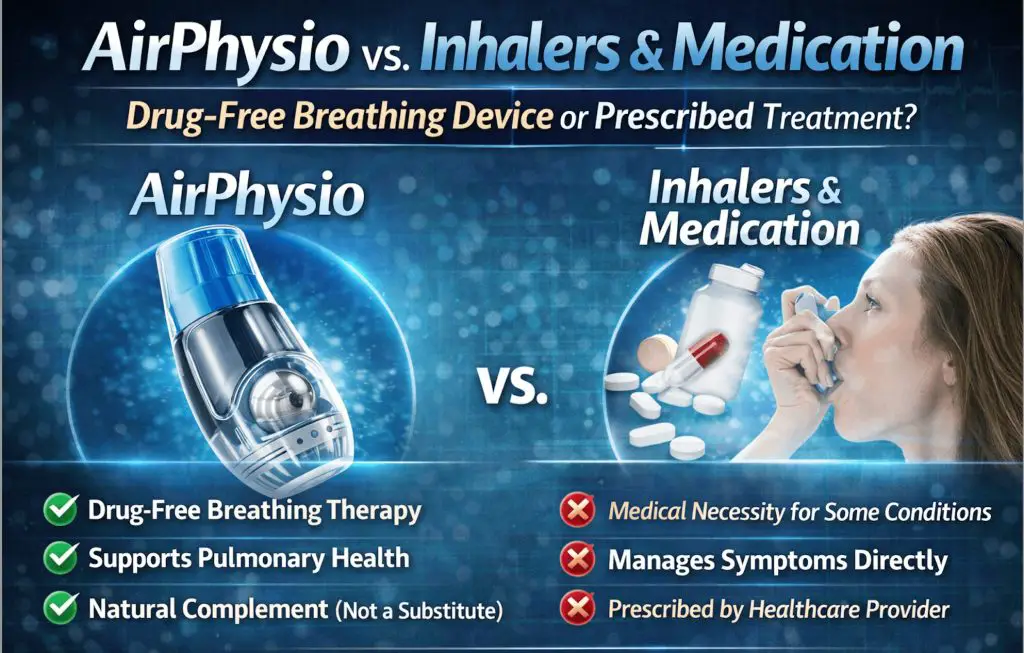
AirPhysio is not a replacement for prescribed medication. Full stop.
However, many people actively search for a non drug breathing therapy to complement medical care. Used alongside professional guidance, resistance breathing can support overall pulmonary health.
That’s why you’ll see AirPhysio framed as a breathing device without medication, not instead of it.
Clinical Logic: What Happens to Mucus, Oxygen Flow, and Lung Expansion Over 30–60 Days
Let’s zoom out and talk physiology—because this is where expectations either get grounded or get wrecked.
Days 1–7: Neuromuscular Awareness
In the first week, most users notice awareness before results. Breathing feels intentional. Exhalation takes effort. Respiratory muscles wake up.
Clinically, this phase is about retraining breathing patterns, not clearing decades of buildup overnight.
Days 8–21: Mucus Mobilization Phase
Between week two and three, something shifts. The oscillation and pressure generated during exhalation help loosen mucus adhering to airway walls.
Research on PEP-based therapies shows measurable improvements in mucus transport velocity—often 20–35% faster clearance compared to passive breathing.
This is where users report:
- Less chest heaviness
- Easier coughing
- Improved chest congestion relief
Days 22–45: Oxygen Flow Efficiency
As airways stay open longer during exhalation, the following inhale becomes deeper. That improves lung expansion and oxygen distribution.
Small gains matter here. Even a 5–10% improvement in tidal volume can noticeably reduce shortness of breath during daily activities.
Days 46–60: Conditioning and Endurance
By the two-month mark, respiratory muscles adapt. The diaphragm works more efficiently. Breathing feels less labored.
This is where people chasing lung capacity improvement or dealing with weak lungs symptoms start noticing endurance changes—not miracles, but momentum.
Consistency is the variable that decides everything.
This is sensitive territory, so let’s be precise.
AirPhysio is not a replacement for prescribed medication. Full stop.
However, many people actively search for a non drug breathing therapy to complement medical care. Used alongside professional guidance, resistance breathing can support overall pulmonary health.
That’s why you’ll see AirPhysio framed as a breathing device without medication, not instead of it.
Is AirPhysio Legit or Just Another Viral Device?
Fair question. Viral doesn’t always mean valuable.
What separates AirPhysio from typical “as‑seen‑on‑the‑internet” gear is that PEP therapy isn’t new. What’s new is accessibility.
A clinic‑grade airway clearance session can cost $60–$120 per visit. AirPhysio is a one‑time purchase, usually priced under a single appointment.
So when people ask “is AirPhysio legit?” the most honest answer is this: the mechanism is legitimate, the execution is simple, and the results depend on use.
AirPhysio Price, Cost, and Where to Buy
Let’s talk money—clearly, calmly, and without smoke and mirrors.
The AirPhysio price typically falls into a one-time purchase range that’s lower than a single in-clinic respiratory therapy session. Depending on region and active promotions, the AirPhysio cost is usually positioned as a mid-range wellness investment, not a recurring expense.
There are no subscriptions, no replacement filters, and no hidden add-ons. What you buy is what you use.
Where Should You Buy AirPhysio?
Short answer: the AirPhysio official website.

Here’s why:
- Authentic device (knockoffs exist)
- Valid AirPhysio warranty
- Access to official support and instructions
- Reliable AirPhysio shipping worldwide
Third-party marketplaces may list cheaper versions, but many users report inconsistent quality or missing components. If you’re serious about trying it, buying direct reduces friction and risk.
If you’re actively searching “buy AirPhysio,” going straight to the source is simply the smarter move.
You’ll see slight pricing variations depending on region and promotions, but generally:
- AirPhysio cost sits in the mid‑two‑figure to low‑three‑figure range
- No subscription
- No replacement cartridges
If you’re buying, always go through the AirPhysio official website to avoid knockoffs. Yes, they exist.
Search trends show “buy AirPhysio” spikes during flu season and winter months, which tracks with respiratory demand cycles.
How to Use AirPhysio Correctly
Using it wrong wastes time. Using it right compounds benefits.
Basic AirPhysio instructions:
- Sit upright
- Inhale through your nose
- Exhale steadily through the device
- Repeat for 5–10 minutes
Most protocols recommend 1–2 sessions daily. Consistency beats intensity.
Cleaning? Simple. Warm water rinse. Occasional mild soap. That’s the AirPhysio cleaning guide in a nutshell.
AirPhysio for Sleep, Snoring, and Nighttime Breathing
This one surprises people.
Snoring often ties back to airway resistance and breathing patterns. While AirPhysio isn’t a mouthguard, some users report reduced snoring after weeks of respiratory training.
That’s why keywords like snoring breathing device and device to reduce snoring naturally keep popping up.
No guarantees. But the connection isn’t random.
AirPhysio Pros and Cons
Pros
- Drug‑free
- Portable
- Backed by respiratory principles
- Low long‑term cost
Cons
- Requires discipline
- Not instant
- Not a medical treatment
Balance matters.
Medical & Compliance Disclaimer (Read This)
AirPhysio is designed to support breathing and airway clearance, not diagnose, treat, cure, or prevent any disease.
It is not a medical device and should not replace professional medical advice, prescribed treatments, or emergency care. Individuals with diagnosed respiratory conditions such as COPD, asthma, emphysema, or chronic bronchitis should consult a qualified healthcare professional before starting any new breathing regimen.
Results vary based on consistency, technique, and individual health factors.
Frequently Asked Questions About AirPhysio
What is AirPhysio and what does it actually do?
AirPhysio is a handheld breathing resistance device that uses positive expiratory pressure (PEP) to support airway clearance and lung conditioning. When you exhale through the AirPhysio device, it creates resistance and gentle vibration that may help loosen mucus, keep airways open longer, and engage respiratory muscles. It’s commonly used as a breathing therapy device at home, not as a medical treatment.
How does AirPhysio work compared to normal breathing?
Normal breathing doesn’t create enough back pressure to mobilize mucus effectively. AirPhysio works by adding controlled resistance during exhalation, which increases airway pressure and airflow oscillation. This process can support mucus clearing, improve airflow mechanics, and encourage deeper subsequent inhalations.
Does AirPhysio work?
For many users, yes—when used consistently.
Is AirPhysio worth buying?
If you value daily lung training, probably. If you want a shortcut, no.
Are there AirPhysio side effects?
Rare. Some people feel lightheaded if they overdo early sessions. Pace yourself.
Is AirPhysio safe to use every day?
For most healthy adults, yes. AirPhysio is designed for daily use, typically 5–10 minutes once or twice per day. Overuse can cause lightheadedness, especially in the beginning, so gradual progression matters. Anyone with diagnosed respiratory conditions should consult a healthcare professional before starting.
Can AirPhysio replace inhalers or medication?
No. AirPhysio is not a replacement for inhalers or prescribed medication. It’s considered a non drug breathing therapy that may complement medical treatment under professional guidance. Think support tool, not substitute.
Is AirPhysio good for COPD, asthma, or bronchitis?
AirPhysio is often searched as a COPD airway clearance device, asthma breathing support device, and for bronchitis mucus relief. While it does not treat these conditions, breathing resistance and airway clearance techniques are commonly used in respiratory physiotherapy to support breathing efficiency. Always consult a clinician if you have a diagnosed condition.
How long does it take to see results with AirPhysio?
Some users notice changes in breathing awareness within the first week. Mucus mobilization often occurs between 2–3 weeks, while endurance and breathing efficiency improvements may appear after 30–60 days of consistent use. Consistency is the deciding factor.
Does AirPhysio help with shortness of breath?
By supporting airway clearance and improving breathing mechanics, AirPhysio may help reduce the sensation of breathlessness for some users. It’s commonly explored for shortness of breath relief and breathing problems solution, particularly when symptoms are linked to congestion or weak respiratory muscles.
Is AirPhysio legit or just another viral lung cleaning device?
AirPhysio gained attention as a viral lung cleaning device, but the underlying principle—PEP breathing—is well-established in respiratory care. The legitimacy comes from the mechanism, not the marketing. Like exercise equipment, results depend on how regularly it’s used.
Can AirPhysio help with post-viral cough or breathing issues after flu or COVID?
Many people search for post viral cough treatment at home and land on AirPhysio because breathing resistance can support mucus clearance and breathing control. While it’s not a treatment, it may help manage lingering congestion when used appropriately.
How do you use AirPhysio correctly?
Basic AirPhysio instructions include inhaling through the nose, exhaling steadily through the device, and maintaining an upright posture. Sessions typically last 5–10 minutes. Avoid forceful blowing; controlled exhalation works best.
How do you clean and maintain AirPhysio?
AirPhysio maintenance is simple. Rinse with warm water after use and occasionally clean with mild soap. Allow it to air dry completely. This straightforward routine forms the core of the AirPhysio cleaning guide.
What is the difference between AirPhysio and other PEP devices?
Compared to traditional PEP, Flutter, or Acapella devices, AirPhysio focuses on simplicity and portability. It sacrifices adjustability for ease of use, which often improves consistency for everyday users.
How much does AirPhysio cost?
The AirPhysio price is typically a one-time payment, often less than the cost of a single respiratory therapy appointment. There are no subscriptions or replacement parts required.
Where is the best place to buy AirPhysio?
The safest option is the AirPhysio official website, which ensures authenticity, warranty coverage, and reliable customer support. This is why most buyers searching buy AirPhysio are directed to the official source.
Is AirPhysio worth buying?
If you’re looking for a drug free breathing device to support lung health, improve breathing habits, and assist with airway clearance at home, AirPhysio may be worth considering. Like any training tool, its value depends on consistent use.
Final Thoughts: Should You Try AirPhysio?
I’ll keep this straight.
If you want a best lung cleaning device that works with your body instead of overriding it, AirPhysio makes sense. If you want effort‑free results, it won’t.
Used as intended, the AirPhysio breathing device fits neatly into modern, preventive lung care. And in a world where respiratory health is finally getting the attention it deserves, that’s not a small thing.
AirPhysio isn’t hype. It’s habit. And habits, done right, change outcomes.